
Preventative Maintenance in New Mexico Multifamily Housing: An Investment That Pays for Itself
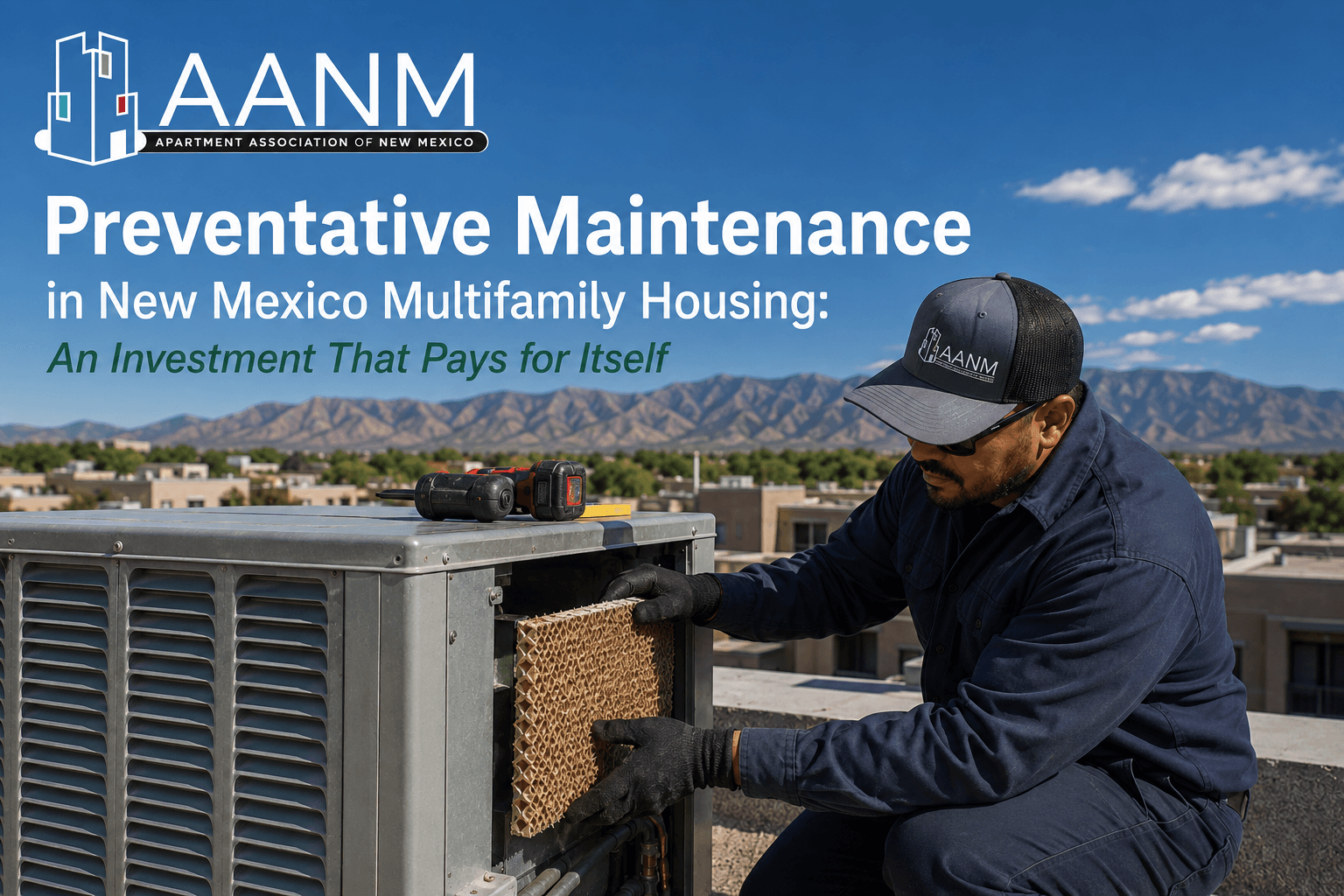
Preventative Maintenance in New Mexico Multifamily Housing: An Investment That Pays for Itself
Preventative maintenance is one of the smartest investments a multifamily owner can make. While it may be tempting to postpone repairs to reduce short-term expenses, deferred maintenance almost always leads to higher costs, more resident complaints, increased emergency service calls, shortened equipment life, and reduced property value.
For New Mexico apartment communities, preventative maintenance is especially important. Our unique climate presents challenges that differ from many other parts of the country. Intense summer heat, low humidity, blowing dust, occasional monsoon storms, freezing winter nights, and hard water all take a toll on buildings and building systems. A proactive maintenance program helps protect your investment while creating a safer, more comfortable living environment for residents.
Why Preventative Maintenance Matters
A well-maintained community offers benefits that extend far beyond appearance.
Property owners who consistently invest in preventative maintenance often experience:
- Lower repair and replacement costs
- Fewer after-hours emergency service calls
- Longer life expectancy for major building systems
- Higher resident satisfaction and lease renewals
- Improved curb appeal
- Better online reviews
- Reduced liability exposure
- Increased property value
Many of the most expensive repairs include roof failures, plumbing leaks, HVAC replacement, structural damage, or mold remediation, which begin as relatively minor issues that could have been identified during routine inspections.
Preventative maintenance isn't simply a maintenance philosophy; it's a long-term asset management strategy.
New Mexico's Climate Requires a Different Approach
Unlike many states that battle excessive moisture year-round, New Mexico properties must contend with intense ultraviolet exposure, extreme temperature swings, blowing dust, low humidity, seasonal monsoon storms, and hard water.
Summer temperatures regularly exceed 100 degrees in many parts of the state, placing enormous strain on cooling systems. Dust storms clog HVAC filters, coat condenser coils, and reduce equipment efficiency. Monsoon rains can expose roofing deficiencies and drainage problems that remain hidden during dry months.
During winter, overnight freezes can damage irrigation systems, hose bibs, exposed plumbing, and landscaping if properties are not properly winterized.
Because of these conditions, preventative maintenance schedules should be built around New Mexico's seasonal weather patterns rather than relying on generic national maintenance calendars.
HVAC Should Be Your Top Priority
No building system generates more resident service requests than heating and cooling equipment. In New Mexico, where many multifamily communities rely on evaporative cooling, preventative HVAC maintenance is one of the highest-return investments an owner can make.
Whether your property utilizes refrigerated air, evaporative coolers, or a combination of both, every cooling system should be serviced before the start of the cooling season.
Evaporative Cooler Maintenance
Evaporative coolers remain one of the most common cooling systems throughout New Mexico because they provide economical, energy-efficient cooling in our dry climate. However, they require routine maintenance to perform efficiently and extend their service life.
Before each cooling season, maintenance personnel should:
- Replace evaporative cooler pads if they are worn or heavily coated with mineral deposits.
- Clean the water reservoir and remove sediment that accumulated during the off-season.
- Flush water distribution lines to ensure even water flow over the pads.
- Inspect and test the water pump.
- Verify proper float valve operation and water level.
- Inspect belts, pulleys, bearings, and blower motors.
- Lubricate motors and bearings where applicable.
- Check water supply lines and drains for leaks.
- Clean and adjust bleed-off systems to minimize mineral buildup caused by New Mexico's hard water.
- Test thermostats and control systems.
- Inspect roof-mounted units for rust, deteriorated flashing, and roof penetrations that could allow water intrusion.
Throughout the summer, pads should be inspected periodically for mineral buildup, algae growth, and airflow restrictions. At the end of the cooling season, systems should be thoroughly drained, cleaned, and winterized to prevent corrosion and freeze damage.
Refrigerated Air Systems
Properties with refrigerated air should also complete a comprehensive preseason inspection that includes:
- Replace HVAC filters.
- Clean evaporator and condenser coils.
- Check refrigerant pressures and inspect for leaks.
- Verify proper condensate drainage.
- Inspect electrical connections and capacitors.
- Test thermostat calibration.
- Inspect ductwork for leaks.
- Verify blower motor operation and airflow.
Routine HVAC maintenance provides numerous benefits, including lower utility costs, longer equipment life, fewer emergency service calls, improved resident comfort, better indoor air quality, and reduced long-term capital replacement costs.
Preparing cooling systems before temperatures begin to climb can help owners avoid many of the emergency repairs that occur during New Mexico's hottest months.
Don't Ignore the Roof
New Mexico's abundant sunshine is wonderful for outdoor recreation, but ultraviolet radiation is one of the leading causes of roof deterioration.
Roofs should be inspected at least twice each year and after significant wind or hail events.
Maintenance teams should inspect for:
- Damaged flashing
- Cracked sealants
- Ponding water
- Loose roof penetrations
- Blocked roof drains
- Membrane deterioration
- Wind damage
- Signs of previous leaks
Addressing small roofing issues early often prevents major water intrusion and expensive structural repairs.
Water Is Still Your Biggest Enemy
Although New Mexico is known for its dry climate, water damage remains one of the most expensive maintenance issues facing apartment owners.
Routine inspections should include:
- Water heater connections
- Toilet supply lines
- Sink shutoff valves
- Washing machine hoses
- Irrigation systems
- Pool equipment
- Exterior hose bibs
- Building expansion joints
Many owners are also installing smart leak detection systems in mechanical rooms and other high-risk locations. These systems can detect leaks before they become catastrophic insurance claims.
Hard Water Requires Additional Attention
Much of New Mexico has naturally hard water, which can leave significant mineral deposits inside plumbing systems, water heaters, and cooling equipment.
Regular flushing of water heaters helps improve efficiency while extending equipment life.
Maintenance teams should also inspect:
- Shower heads
- Faucet aerators
- Irrigation valves
- Boiler systems
- Cooling equipment
- Water softeners, where installed
Ignoring mineral buildup can reduce efficiency and shorten the lifespan of expensive mechanical equipment.
Landscaping Requires Water Management
Well-maintained landscaping enhances curb appeal, but New Mexico's drought conditions require efficient irrigation management.
Best practices include:
- Inspect irrigation systems monthly.
- Repair leaks immediately.
- Replace broken sprinkler heads.
- Adjust watering schedules seasonally.
- Utilize drip irrigation whenever practical.
- Select drought-tolerant landscaping.
- Keep vegetation trimmed away from buildings.
Water conservation is becoming increasingly important for both environmental stewardship and controlling operating expenses.
Exterior Maintenance Protects Your Investment
The exterior of your property creates the first impression for prospective residents.
Routine inspections should include:
- Parking lots
- Sidewalks
- Stairways
- Handrails
- Exterior lighting
- Paint
- Stucco
- Building trim
- Gutters
- Drainage systems
- Property signage
Repairing trip hazards, maintaining adequate lighting, and addressing deteriorating building materials not only improves curb appeal but also helps reduce liability exposure.
Pest Control Should Be Preventative
New Mexico's desert climate creates unique pest challenges that require year-round attention.
Regular pest management programs should focus on:
- Rodents
- Ants
- Scorpions
- Cockroaches
- Wasps
- Spiders
Preventative measures such as sealing building penetrations, eliminating standing water, maintaining landscaping, and conducting routine inspections are often far more effective than responding after infestations occur.
Build a Seasonal Maintenance Calendar
Creating a seasonal preventative maintenance schedule helps ensure that critical tasks are completed before problems arise.
Spring
- Service HVAC and evaporative cooling systems
- Inspect roofs
- Activate irrigation systems
- Clean gutters
- Pressure wash buildings
- Refresh landscaping
Summer
- Monitor HVAC performance
- Inspect roofs after monsoon storms
- Trim vegetation
- Check exterior lighting
- Monitor irrigation efficiency
Fall
- Prepare heating systems
- Winterize evaporative coolers
- Blow out and winterize irrigation systems
- Inspect weather stripping
- Flush water heaters
- Seal exterior gaps around plumbing and utility penetrations
Winter
- Protect exposed plumbing
- Monitor freeze protection
- Test emergency lighting
- Inspect roofs after winter storms
- Schedule larger capital improvement projects during slower leasing periods
Technology Can Improve Maintenance Operations
Modern property management software allows maintenance teams to schedule recurring inspections, document repairs with photographs, track work orders, monitor equipment history, and identify recurring maintenance issues.
Historical maintenance data also helps owners develop more accurate operating budgets while identifying future capital replacement needs.
Even smaller apartment communities benefit from digital maintenance tracking rather than relying solely on paper logs.
Preventative Maintenance Is Good Business
Preventative maintenance is far more than simply fixing things before they break. It is a comprehensive asset management strategy that protects property values, improves resident satisfaction, reduces operating expenses, and minimizes emergency repairs.
For New Mexico multifamily communities, understanding our unique climate and tailoring maintenance practices accordingly can significantly extend the life of major building systems while lowering long-term ownership costs.
Residents notice the difference between a property that reacts to problems and one that proactively maintains its community. Clean, well-maintained buildings create better first impressions, foster resident pride, and encourage lease renewals.
At the Apartment Association of New Mexico, we encourage housing providers to view preventative maintenance as one of the smartest investments they can make. By staying ahead of potential problems, owners and managers can reduce costly surprises, preserve the value of their assets, and continue providing safe, quality housing for New Mexicans for years to come.