
New Construction: October 2026
New Construction: October 2026
New residential construction declines in September due to weak demand and high costs.
By George Ratiu |
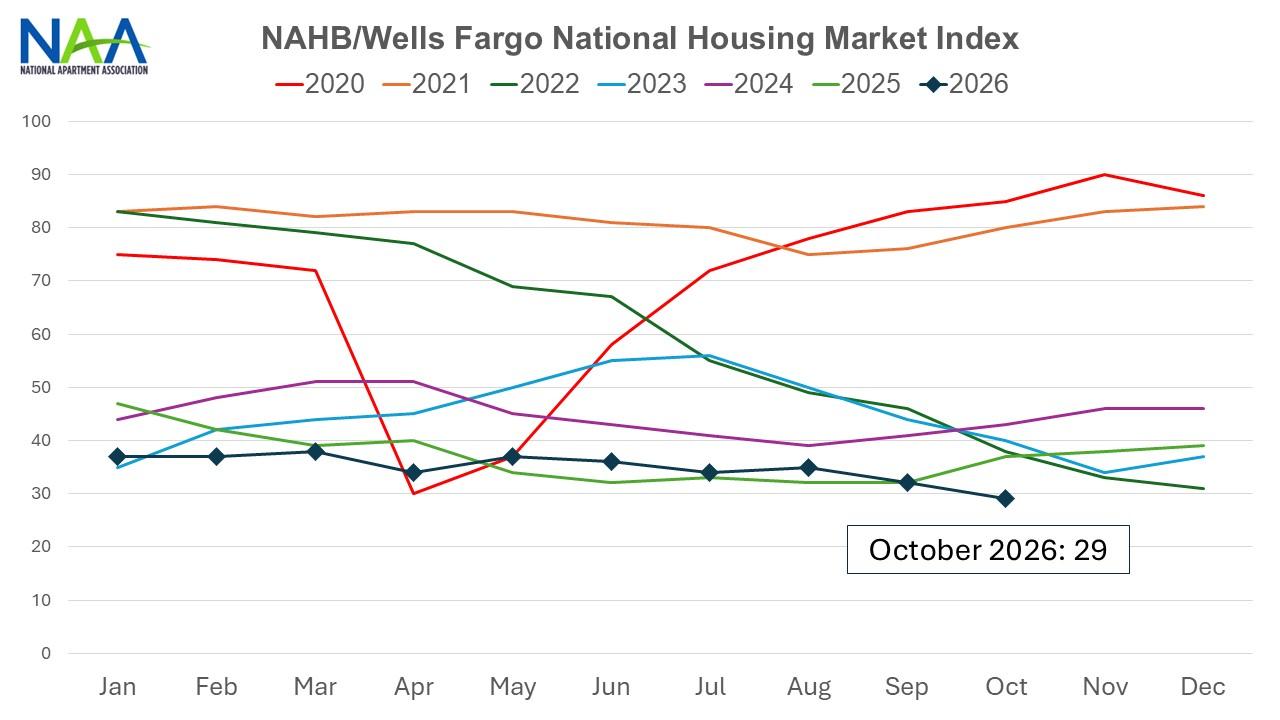
Home builders find themselves between a rock and a hard place, squeezed by tariffs on imports pushing cost of materials higher, immigration enforcement curbing labor availability and surging interest rates locking buyers out of the market. The NAHB Housing Market Index, a monthly measure of builder sentiment, dropped to the lowest value since June 2012, which was the tail end of the 2008 Great Financial Crisis and housing crash. Builders reported a sharp decline in the traffic of prospective buyers, a clear indication that the 7.4% rate on the 30-year mortgage closed the affordability door to a large segment of the market.
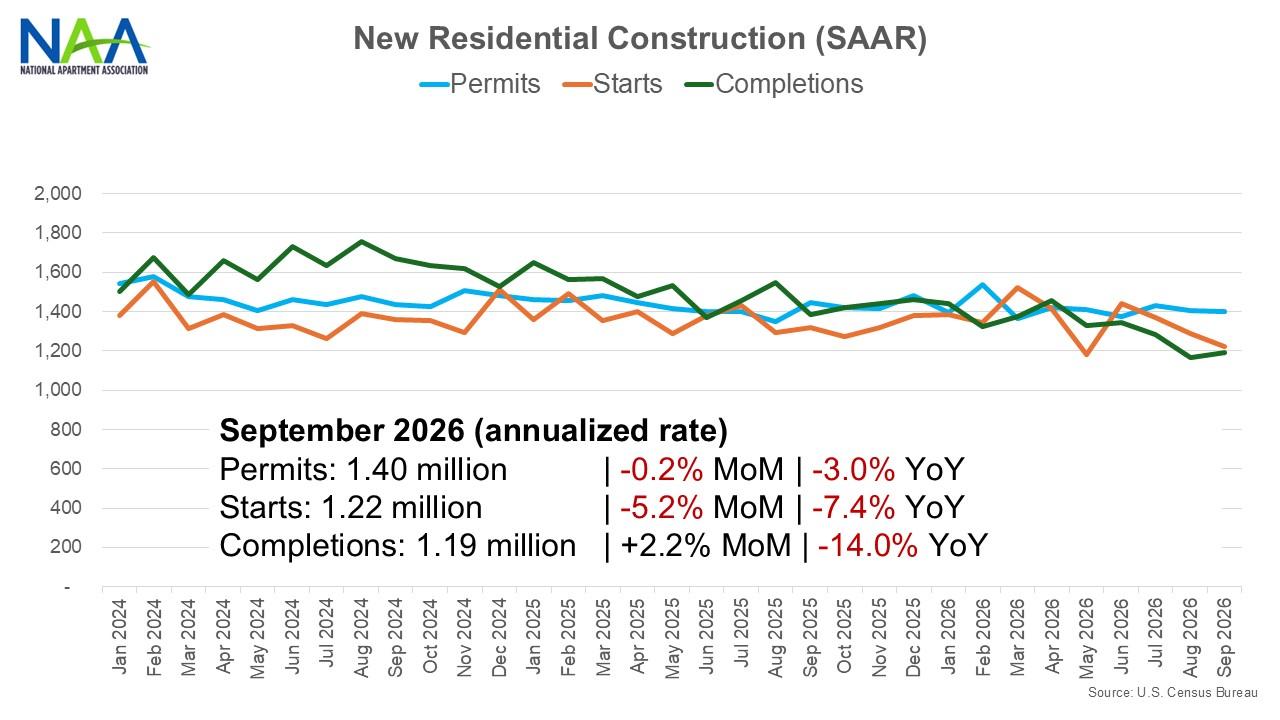
Today’s report on new construction activity from the Census Bureau mirrors ongoing challenges, with most indicators pulling back in September. Permits slid 0.2% from August, driven by declining single-family units. Permits were 3.0% below last year’s numbers.
Housing starts declined 5.2% from the prior month to 1.22 million annualized units, on account of pullback in both single-family and multifamily projects. Starts were 7.4% lower than a year ago, due to lower activity for buildings with five or more units. Completed homes saw a 2.2% uptick from August but dropped 14.0% from September 2025.
The overall figures point to a market in retreat, with construction seemingly headed for hibernation. Beneath the headline numbers there were a few interesting nuances. Permits for multifamily buildings improved in September from the prior month, as did the number of completed properties, a sign that in some markets construction companies may be responding to stronger local conditions.
The single-family market is feeling the blues this fall, as high prices, surging mortgage rates and stagnating wages have placed many homebuyers’ plans on ice. Existing home sales saw an uptick in September from the prior month, but were down from 2025, and the only price category to see higher sales was the $1 million and above. Sales of new homes also saw a monthly uptick in August, spurred by builder incentives and mortgage buydowns. With more than 40% of home builders slashing prices, the median price of a new home dropped below that of an existing one. At the same time, even with incentives, the number of buyers who can make the financing math work is shrinking.
In the short-term, for many Americans looking for reprieve from the affordability crunch, rental markets continue to offer alternative options. Whether it is single-family properties, townhouses or apartments, rental homes offer rents that tend to be more approachable than a comparable mortgage payment. In the long-run, boosting the availability of affordable new construction, both for-sale and for-rent, remains the key to improving the cost of housing.