
Inflation Insights: October 2026
Inflation Insights: October 2026

Inflation accelerates in September as price gains broaden across consumer spending categories.
By George Ratiu |
Americans experienced a pickup in prices of goods and services during September, as high oil prices permeated through the supply chain and companies passed higher costs onto consumers. The war in Iran continues to impact the price of oil, especially as Houthi strikes on Saudi refineries further disrupt production. In addition to high gasoline prices at the pump, which place a noticeable burden on commuters, the cost of diesel fuel has spiked noticeably. Given how central diesel is to the vast fleet of commercial trucks and freight trains in the United States, the elevated cost is showing up in a wide range of products reaching retailers’ shelves.
Today’s Consumer Price Index report shows that prices rose at a seasonally adjusted rate of 0.6% in September, accelerating from the 0.4% gain in August and 0.1% in July. Compared with September of 2025, the CPI increased 3.7%, faster than economists’ expectations. The rebound in inflation translates into higher monthly bills for most households and noticeable strains on housing.
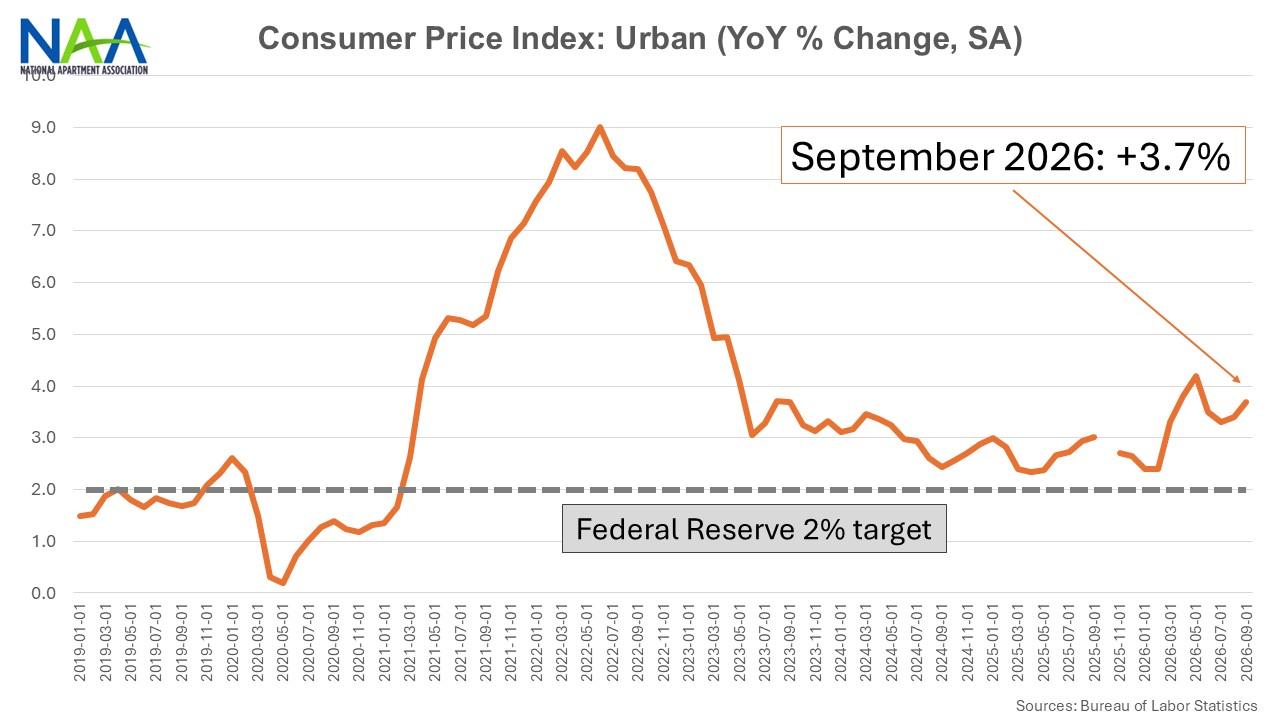
High energy prices spread through supply chain into retail goods and services
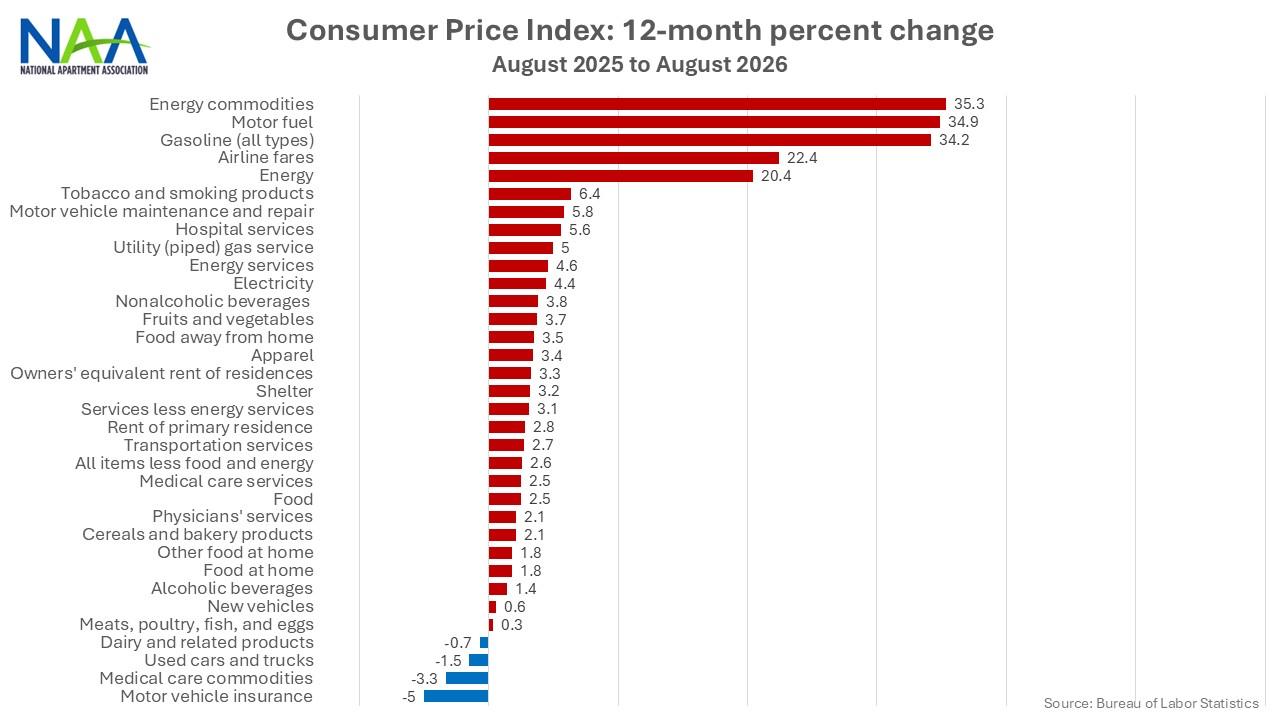
The energy index was the major contributor to the month’s jump in prices, posting a 20.4% year-over-year advance. Gasoline and fuel oil saw prices jump 34.2% and 74.2%, respectively. The expansion of the war in Iran, with Houthi forces amplifying Iranian military activity to disrupt the Strait of Hormuz traffic, while simultaneously attacking Saudi Arabia’s refineries and infrastructure, is keeping oil markets worldwide on the edge.
In addition, Russia’s war in Ukraine is seeing expanded attacks on energy facilities in both countries, leading to a direct impact on diesel prices. The pressure of higher diesel prices on U.S. transportation networks prompted the White House to resort to the unexpected move of making an agreement with Russia to waive sanctions on Russian diesel through April 2027, in exchange for 4 million tons of diesel shipped to global markets.
Energy services, which include electricity and utility gas, saw further increases from a year ago. Electricity prices rose 4.4% from September 2025 while piped gas prices increased 5.0% over the same period.
Higher fuel prices showed up in public transportation prices, which rose 15.6% year-over-year. Airline fares jumped 22.4% in September compared with the same month last year. Train and bus fares within cities also increased, to the tune of 9.6% on a yearly basis.
These higher costs of moving goods to retail markets are compounded by ongoing tariffs. With a large share of what Americans buy coming from imports, consumer goods are seeing escalating prices.
Grocery store food prices were up 1.8% in September, as cereals, bread, beef, fish, milk, fruits and vegetables showcased higher price tags. Restaurant meals also came with higher prices during the month. Prices for clothing (up 3.4%), sporting goods (up 4.7%), toys (up 6.2%), new cars (up 1.5%), hospital services (up 5.6%) and college tuition (up 4.0%) loaded additional burdens on households' monthly budgets.
For housing, prices remained on an upward trajectory. The cost of shelter rose 3.2% from last year. With shelter accounting for 33% of the total CPI basket of prices, housing costs will continue to weigh on the trajectory of inflation.
The Federal Reserve’s October meeting gains additional urgency
As the Federal Reserve’s Federal Open Market Committee (FOMC) plans its meeting during the last week in October, the resurgent inflation will take center stage. While recent remarks by FOMC governors indicate that another hike may not be necessary before the December meeting, escalating prices will weigh heavily on consumer optimism, especially as we move into the winter holiday season, a critical period for most retailers.
The economy remains on solid footing, employment is broadly stable and consumers continue to weather price increases. However, measures of consumer mood are clearly indicating that we may be approaching the limit to how much higher prices can float before households’ ability to spend is reached.
Bond investors remain concerned about current inflationary trends. The 10-year Treasury has been above 5.0% since late September, a signal that capital markets do not see price pressures abating.
Escalating mortgage rates shrink the pool of buyers for housing markets
The ongoing affordability crunch in residential markets is worsening as mortgage rates follow the upward path of the 10-year Treasury. Based on data from several sources, the rate for a 30-year mortgage is running around 7.4% - 7.6%. For many buyers, especially first-timers, high home prices combined with current rates translate into deferred homeownership plans.
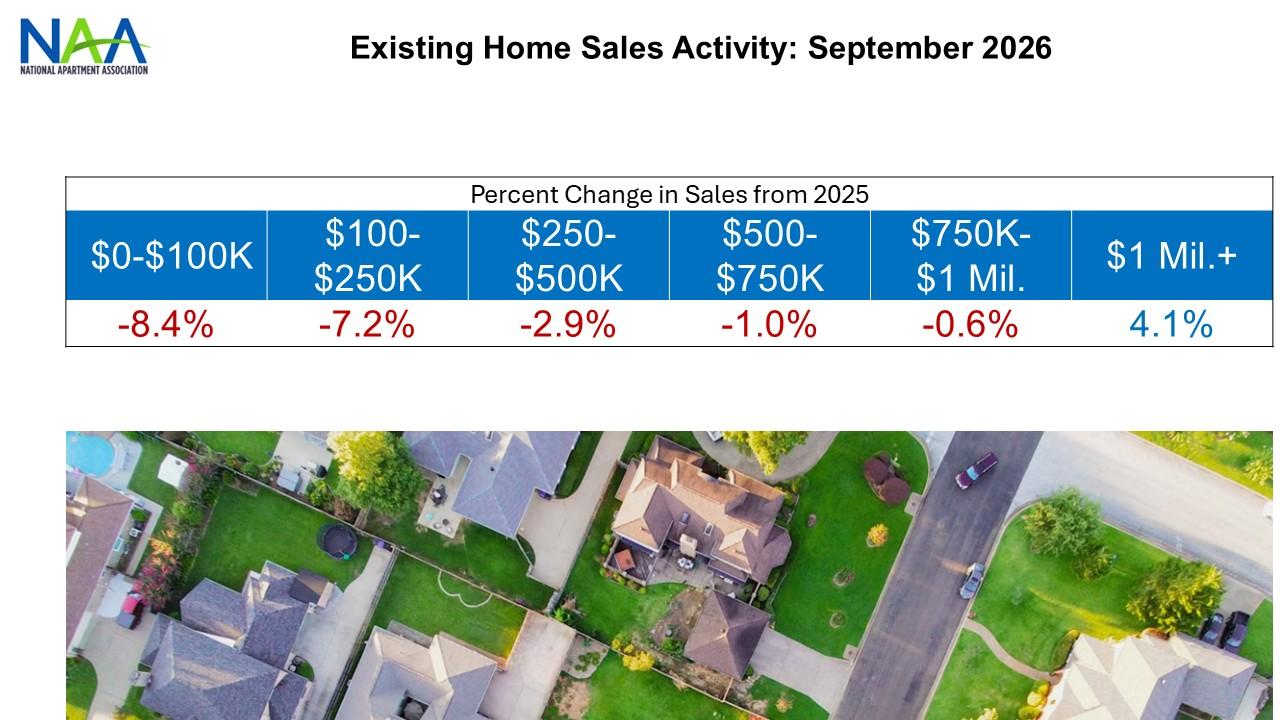
Data on home sales underscore the challenge. Sales of existing homes saw a slight monthly uptick in September. However, at an annualized pace of 3.99 million in September, transactions remain near recessionary levels and still below last year. Looking at sales by price categories, a striking detail stands out: the only homes to see a year-over-year increase in activity were those priced $1 million or more.
On the rental side of housing, inflation is adding pressure on owners and operators, as well. Operating costs, including repair, maintenance, insurance and property taxes, continue to take the largest share of revenue. As the recently updated Dollar of Rent Tool underscores, almost 90 cents of every dollar of rent cover expenses. In addition, for developers and construction companies, higher prices mean revised or delayed new housing projects.
Key takeaway
Inflation reaccelerated in September, pushed by surging energy and transportation costs that are spreading across consumer goods, services and housing. The increase is squeezing household budgets, keeping interest rates elevated and worsening housing affordability. It also puts additional pressure on the Federal Reserve as it weighs its next policy move.