
Interest Rates: July 2026
Interest Rates: July 2026

Federal Reserve’s rate-setting committee keeps rate steady at the July 2026 meeting.
By George Ratiu |
The Federal Reserve’s rate-setting committee is walking a tightrope this week as it weighs an expanding economy and growing employment against inflation running above its target. The Federal Open Market Committee (FOMC) decided to keep the funds rate unchanged at the end of today’s meeting. The announcement stood out for its brevity, a new hallmark of the FOMC’s Chair, Kevin Warsh’s approach. The statement also noted that three governors voted for to raise the target rate by 25 basis points, a signal that inflationary concerns remain central to the bank’s outlook.
The central bank must convince markets it remains serious about inflation without sounding indifferent to consumers and businesses already squeezed by high borrowing costs. Chair Warsh has made “price stability” the centerpiece of his early tenure, while also pulling back from the Fed’s custom of telegraphing policy moves well in advance. Complicating the central bank’s actions, the President stated this week that the Fed should lower interest rates to the point where they are the lowest “in the world.”
The economy gives the Fed enough strength to stay cautious, but not enough comfort to stay complacent. Consumer spending continues to support growth, even as energy volatility tied to Iran and the Strait of Hormuz keeps pressure on oil and gasoline prices. With the average price of a gallon of gas above $4.0, Americans continue to see higher bills for groceries, clothing, energy, housing and services.
The latest Consumer Price Index (CPI) data showcase the impact of energy costs on households. The largest year-over-year jumps in prices occurred for oil-related products, such as fuel oil (up 42.9%), motor fuel (up 27.2%) and gasoline (up 26.7%). Airline fares also experienced a noticeable jump, with a 26.5% yearly advance. Scanning price gains across categories showcases that consumers experienced higher prices across most daily items, including food, apparel, housing, transportation and energy.
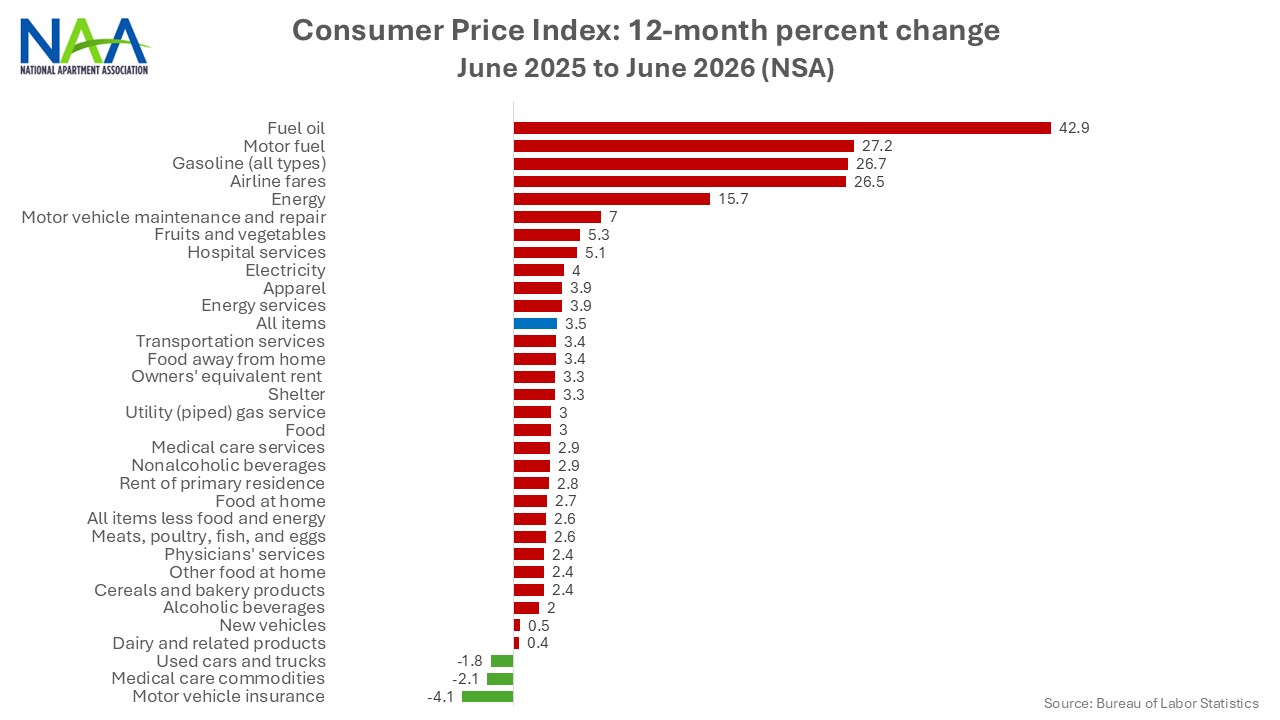
The result is a household economy that looks resilient in the aggregate but strained at the kitchen table. While markets cheered the softer June CPI numbers, consumers do not feel inflation as a monthly data point; they experience the cumulative and significant loss of purchasing power.
That tension gives the Fed a narrow window to wait for more evidence. Stable employment and moderating inflation reduce the urgency for an immediate move, while the upcoming Personal Consumption Expenditures Index and next week’s employment report will help determine whether the economy retains momentum or is masking fractures beneath headline strength.
For the Fed and Kevin Warsh, the next few months are a critical litmus test: can the bank tame the flames of inflation without inflicting the pain of higher rates and risking freezing job growth? The stakes are high as we head into the fall season. Housing affordability and high cost of living are the primary pain points for wary consumers. Much-needed new construction is highly sensitive to financing costs and the price of materials and labor, which remain elevated. The Fed’s balancing act is on a collision course with geopolitical uncertainty, elevated living costs and a political calendar shaped by government funding fights and rising concern over the federal debt burden.