Freddie Mac Mortgage Rates: August 2026
Freddie Mac Mortgage Rates: August 2026
By George Ratiu |
The Freddie Mac 30-year fixed mortgage rate mirrors a bond market on edge about the path of inflation amid volatile geopolitical shifts, a steeper tariff schedule for U.S.-Canada trade and a cooling consumer mood. Moving into the last weeks of summer, the economy is experiencing a premature fall chill, despite elevated temperatures, as consumers continue to pay over $4.0 per gallon of gasoline, along with higher prices for groceries, travel, restaurants and hotels, medical services and daycare.
This week’s Personal Consumption Expenditures report showed that prices rose 3.7% in July compared with the same month last year. Importantly, the core PCE Index, which is the Federal Reserve’s preferred measure of inflation, increased 3.3% from last year.
Fueling inflationary concerns, the White House recently escalated its negotiations with Canada into what some observers called an “all-out trade war” with the announcement of a 50% tariff on $20 billion worth of Canadian goods, such as alcohol, dairy, cement, clothing, and hockey equipment. The 50% levies override protections established under the USMCA trade pact and come in addition to existing specific duties on steel, aluminum, cars and lumber. The Canadian government announced retaliatory dollar-for-dollar tariffs on a raft of American products starting September 8.
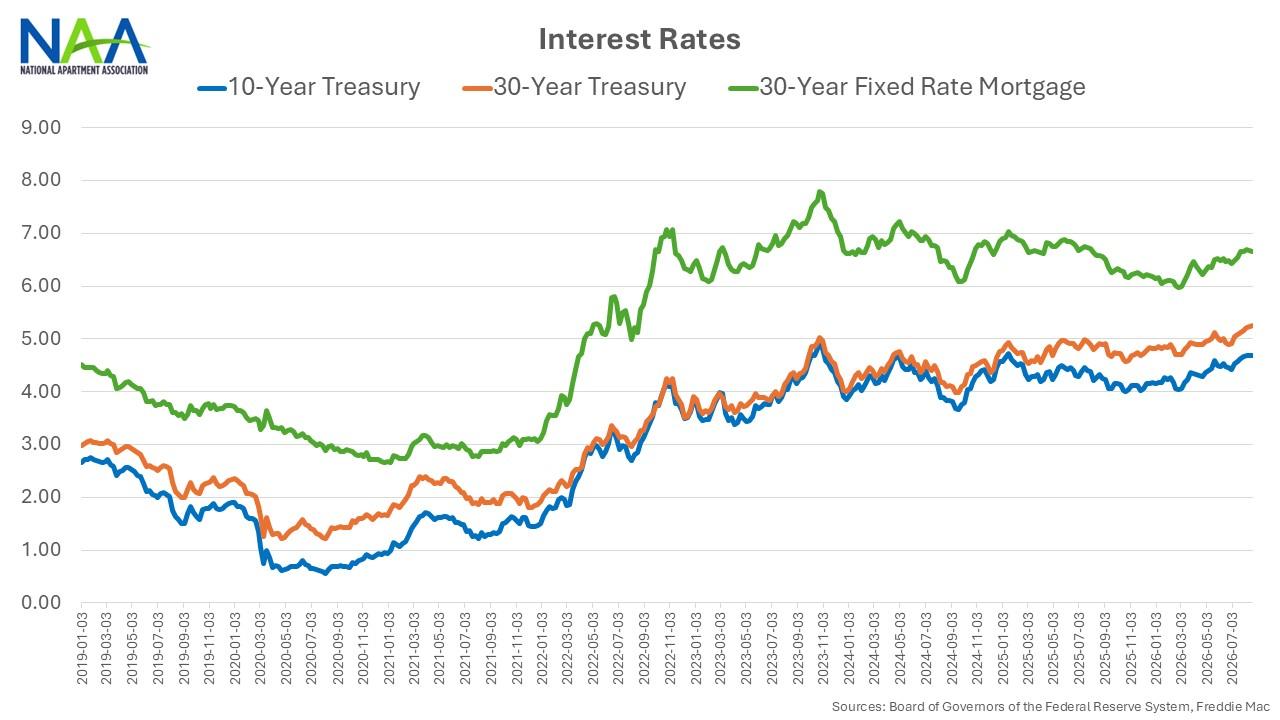
Bond investors are expecting these developments to continue driving inflation at an elevated pace. Long-dated government bond yields are mirroring these concerns, with the 10-year Treasury hovering in the 4.6% to 4.7% range. Similarly, the 30-year Treasury yield has been above 5.0% for a month and a half, territory not seen since April 2007. Even the unusual move by the Treasury to repurchase bonds to lower interest rates has not been effective.
These moves are effectively putting the spotlight squarely on the Federal Reserve as it heads into the September meeting of the Federal Open Market Committee (FOMC). Markets are also anticipating Chairman Warsh’s remarks at Jackson Hole this Friday for signals that he will offer more clarity about the central bank’s actions. Given his expressed inclination to keep monetary actions closer to the vest and let markets settle rates, lack of clarity may lead to continued volatility.
What remains clear, however, is the fact that economic and policy forces are keeping inflation sticky. Sooner or later, the Fed’s FOMC will have to take action and increase the policy rate in order to moderate the current price trajectory.
For housing, bond markets set the trajectory of mortgage rates. The Freddie Mac 30-year fixed rate has been above 6.5% for seven weeks. Moreover, according to Mortgage New Daily, the average 30-year rate crossed the 6.5% threshold in May of this year and in late July it hit 6.85%.
For a large share of buyers, the combination of elevated rates and record-high existing home prices translate into a hard pass on their ability to qualify for a loan. The monthly payment for a median priced home, financed with a 20% down payment, is almost $2,800, including property taxes and insurance. For a household earning the median annual income of $83,700, for whom the take home pay comes to about $4,900 per month, that mortgage payment comprises an unsustainable 57% of a paycheck.
Not surprisingly, mortgage applications dropped this week, echoing the declines in signed contracts for both new and existing homes seen in July. The next few months are likely to be an uphill slog for many buyers still looking to purchase a home, as they work against the current affordability ceiling. Unless bond yields retreat meaningfully and home prices decline, the fall housing market will also be a slower-moving environment for sellers, builders and lenders.